Summary of the author’s argument

Can the soul be measured?

An inquiry into the measured difference recorded by ancient Egyptian comparative testing, later physician-led scale tests, and the Christian scriptural meaning of what leaves the body at death.

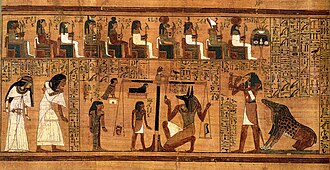
Ancient Egyptian papyrus depicting the weighing of the heart
The weighing sequence examined in the manuscript: the difference is compared with the standard ostrich feather.

The central inquiry

A force, a substance, or a mystery?

The manuscript brings together an ancient Egyptian comparative weighing sequence, early twentieth-century experiments conducted by five physicians led by Dr. Duncan MacDougall, a logical argument about living and nonliving matter, and biblical passages about resurrection.

No mass was detected leaving the bodies at the time of the scale movement, indicating these were forces outside of the mass. The description fits a force.

From there, the manuscript argues for creation, salvation through Jesus Christ, and further investigation with modern instruments.

Evidence examined

Three records, read together

01

Egyptian comparative test

The manuscript interprets the entire Book of the Dead scale sequence as a comparative test. The internal-organ containers appear on one side, a tare or zeroing element appears near the pivot, and the measured difference is compared against the standard, calibrated ostrich feather held by Maat. A scribe records the result. In the author’s argument, the point is not merely Egyptian belief: a standard was present because something was being compared and measured.
02

Soul Substance testing

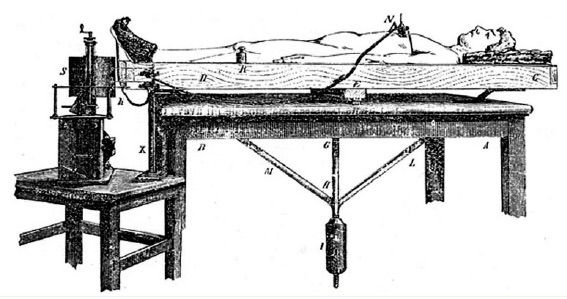
Five physicians, led by Dr. Duncan MacDougall, constructed weighing apparatuses and tested six dying human subjects. Each individual tested revealed different results of less than an ounce. No mass was detected leaving the bodies at the time of the scale movement, indicating these were forces outside of the mass. The description fits a force or power.

MacDougall’s work did not end with the scale tests. The manuscript records that he continued attempting to photograph or otherwise image the phenomenon for the rest of his life.

03

Animal comparison

Five dogs were tested and showed zero change on the scale. We do not know whether the dogs’ individual actions caused that result.

Historical drawing of a patient weighing apparatus
A historical illustration of a weighing apparatus associated with early soul-weight experiments.
Portrait of physician Duncan MacDougall
Dr. Duncan MacDougall, who led the group of five physicians described in the manuscript.

Biblical and test records

“After two days he will revive us; on the third day he will restore us, that we may live in his presence.”
Hosea 6:2 (NIV)

The recorded timing correspondence

Three-day interval: observed in both Biblical and experimental records. Hosea 6:2 records restoration on the third day; Jesus rose on the third day; Lazarus was raised on the fourth day.

The correspondence between the Biblical record and the test record is evidence used in the argument. The conclusion drawn from it is that restoration requires Jesus.

Evidence used in the argument

Three fact-based tests

01

Functions available in minerals

Observation: Minerals react to outside forces, and chemical reactions are externally triggered rather than self-guided. Test: Compare those available functions with the functions demonstrated by living beings.

02

Life power requirements

Observation: The brain and living processes require power. Test: Account for the power operating those functions and determine whether minerals alone provide it. For more information, refer to the book Evolution is a Law Against Religion.

03

Animals created versus lost

Observation: Animals are recorded as endangered or extinct. Test: Compare the number of animals recorded as endangered and extinct with the number of animals observed being created by evolution. The manuscript uses 1,000,000,000 endangered and extinct animals and zero observed creations for its confidence calculation.

What the record can—and cannot—show

Limitations matter

Cutaway illustration showing the layers and hot core of Earth

The manuscript’s final claim

Judgment, rescue, and the lake of fire

The paper interprets a downward force as a descent toward the earth’s center and connects that idea with the biblical lake of fire. It then presents resurrection through Jesus as the necessary rescue. This is a theological conclusion rather than a finding established by the experiments.

Starting points

Sources named in the manuscript

Ancient Egyptian funerary texts
Including the Book of the Dead and the Papyrus of Ani.

Duncan MacDougall and participating physicians
“Soul Substance,” reported in American Medicine in 1907.

The Holy Bible
Including Hosea 6:2, John 11, Luke 16:23, Romans 3:23, and 1 Corinthians 12:11.

Thomas Aquinas
Philosophical writings on life, desire, and non-living matter.

The original manuscript also refers readers to Douglas A. Huebner’s book Evolution Is a Law Against Religion for the larger argument.